

Why Transparent Plastic Business Cards Are a Smart Choice for Every Business
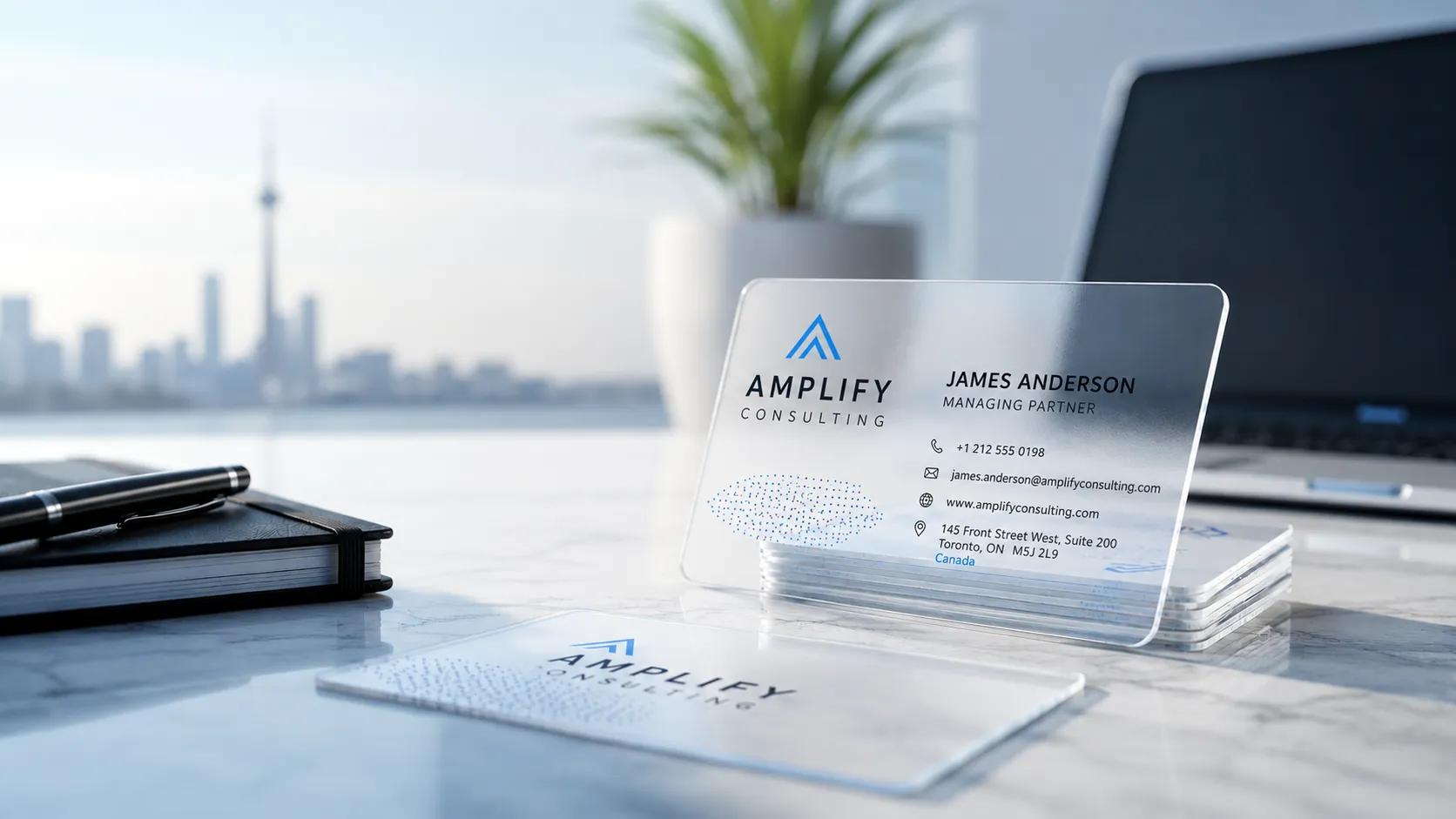
Business cards still do real work. They change hands at conferences, sit on desks, and end up in wallets alongside credit cards and receipts. The material a card is printed on affects how long it survives that journey and how much attention it gets along the way. Transparent plastic business cards have become a practical and widely used format for professionals across many industries, and the reasons come down to durability, design flexibility, and how recipients perceive the card when they first hold it.
What Transparent Plastic Business Cards Are
Transparent plastic business cards are printed on clear polyvinyl chloride, the same base material used for credit cards and government-issued ID cards. The stock is fully see-through before any ink is applied. When a design is printed on the surface, the unprinted areas remain clear, allowing whatever is behind the card to show through.
The standard thickness for these cards is 0.76 mm, which matches a credit card exactly. That weight gives the card a noticeable heft. When someone picks it up for the first time, the physical response is different from picking up a paper card. The material does not flex easily, does not absorb moisture, and does not develop soft corners after sitting in a wallet for a week.
How the Material Affects First Impressions
A business card is often the first physical object a potential client or contact receives from a business. What that object communicates in the first few seconds matters.
Paper cards communicate competence at a basic level. They are expected, readable, and immediately understood. Transparent plastic business cards communicate something additional. The material itself signals that a deliberate choice was made. Recipients often hold the card up to look through it, which means the card gets examined more carefully than most paper cards do. That additional attention is useful for any professional who wants their contact information to stick.
The transparency effect works particularly well for businesses in creative fields, technology, design, media, and any sector where visual identity carries weight. It also works in traditional industries where standing out in a wallet full of white cards has practical value.
Design Options with Clear PVC Stock
One of the most useful qualities of transparent plastic business cards is that the background is not a color at all. It is an absence of material. That creates design possibilities that do not exist with opaque stock.
Floating Text and Graphics
When text or a logo is printed directly on clear PVC without any background fill, the elements appear to float in space. The visual result is clean and minimal. For brands that rely on strong typography or a simple logo mark, this treatment lets those elements carry the full weight of the design without competition from a background color.
White Ink as a Design Element
White ink on clear PVC produces results that are not achievable on white paper. Because the stock behind the white ink is transparent, the white ink itself reads as a solid, opaque element surrounded by nothing. Designers use this to create layered effects, outlines, or ghost images that appear to exist independently of any surface.
Color Printing Over Transparency
When full color printing is applied to sections of a clear card, those areas read with strong saturation against the transparent surroundings. A photograph, a gradient, or a brand color block printed on one portion of a clear card draws immediate visual focus. The transparency around it frames the printed area in a way that white stock cannot replicate.
Translucent Plastic Business Cards as a Related Option
Translucent plastic business cards occupy the middle ground between fully clear and fully opaque stock. The surface is frosted or lightly textured, which diffuses light rather than transmitting it directly. The result is a soft, matte appearance that still communicates the distinctive quality of plastic stock without the full transparency of clear PVC.
Translucent plastic business cards work well for professionals who want the material advantages of PVC without a fully see-through card. The frosted surface reduces fingerprint visibility, which is a practical advantage for cards that change hands frequently. The matte quality also gives certain color palettes a softer, more refined appearance than they would achieve on glossy or clear stock.
Both clear and translucent formats share the same structural and durability characteristics. The choice between them is primarily a visual and brand decision rather than a functional one.
Durability Across Real-World Conditions
The practical case for transparent plastic business cards is straightforward. PVC does not absorb water. It does not crease under pocket or wallet pressure the way paper does. The printed surface does not flake, fade, or smear under normal handling conditions. A card given out at a morning meeting looks the same at the end of the day as it did when it left the cardholder's pocket.
For professionals who distribute cards regularly, at trade shows, sales visits, or networking events, this durability has a direct effect on how many usable cards remain in circulation. Paper cards that get wet, bent, or visually worn tend to be discarded. PVC cards that survive the same conditions remain in circulation, which extends the return on each card printed.
The resistance to moisture is also relevant for professionals who work in environments where cards may be exposed to humidity, outdoor conditions, or surfaces that transfer moisture. A clear plastic business card slipped into a pocket next to a cold drink bottle holds up. A paper card in the same situation usually does not.
Who Uses Transparent Plastic Business Cards
Transparent plastic business cards are used across a wide range of industries and professional contexts. The common factor is not the industry itself but the recognition that a card serves as a physical representative of the brand or individual behind it.
Photographers and creative directors use clear PVC cards because the material reinforces the visual thinking that defines their work. Real estate professionals use them because a card that stands out in a stack of others increases the chance it gets called on. Technology companies use them because the material aligns with the clean, modern aesthetic that their brands communicate.
Outside creative and technology sectors, clear plastic business cards are also used in finance, consulting, legal services, and medical practices. In these contexts, the card signals that quality and detail matter, which is a message those professionals want their clients to receive.
Ordering Considerations
When ordering transparent plastic business cards, several production details affect the final result.
White ink availability is the most important factor to confirm. Many color designs require a white ink underprint to ensure accurate color reproduction on clear stock. Without white ink beneath certain colors, those colors will appear transparent or shifted in tone depending on the background behind the card.
File preparation for clear stock printing differs from preparing files for paper. Designers need to account for which areas will remain transparent and specify clearly where white ink should be applied. Print suppliers who specialize in PVC cards provide templates and preparation guidelines to simplify this process.
Businesses and professionals ready to place an order can review clear, frosted, and full-color PVC formats at Perfect Plastic Cards, which offers transparent plastic business cards with white ink printing options and standard credit card thickness across a range of order quantities.
Minimum order quantities at most suppliers start at 50 to 100 cards, which makes these cards accessible for individual professionals as well as larger teams.
Comparing Clear Plastic Cards to Paper Stock
The most direct comparison is between clear plastic business cards and standard paper business cards, since those two formats represent the widest gap in material properties.
Paper cards are lighter, easier to write on by hand, and fully biodegradable. For professionals who prioritize environmental considerations or who regularly need to add handwritten notes to cards before giving them out, paper remains a practical option.
PVC cards are heavier, water-resistant, and visually distinctive. They do not support handwriting well, and they are not biodegradable in the way paper is. For professionals whose cards travel long distances, sit in files or drawers for months, or need to represent a brand accurately over time, PVC performs better under those conditions.
The choice between the two formats depends on the specific demands of how and where the card will be used, not on a single universal answer.
Summary
Transparent plastic business cards offer a combination of visual distinctiveness and physical durability that paper stock does not match. The clear PVC base creates design options that are specific to the material, including floating graphics, white ink effects, and color printing that is framed by transparency rather than a background color. The material itself holds up under daily handling conditions that cause paper cards to deteriorate. Across creative, corporate, and service industries, professionals use clear and translucent plastic business cards when they want the card to reflect the same standard of quality they apply to the rest of their work.